
Set up the board
Pick a preset or choose the number of rows, the peg spacing, the ball size and how bouncy the balls are. Use real physics or the ideal 50/50 model.
Drop one ball or ten thousand through a board of pegs and watch them pile up into a bell curve, with the exact binomial distribution and a fitted normal curve drawn over the slots. Change the rows, the spacing, the ball size and the bounce, compare a real bouncing board with the ideal 50/50 model, and read the mean, standard deviation and chi-squared test as the balls land.
Open Plinko Simulator →Pick a preset or choose the number of rows, the peg spacing, the ball size and how bouncy the balls are. Use real physics or the ideal 50/50 model.
Press Start for a steady stream, drop a burst of 10 or 100, click on the board to drop from where you point, or fast-forward thousands of balls in seconds.
Watch the histogram fill up next to the expected binomial counts and the fitted normal curve, check the mean, standard deviation and chi-squared test, then save a PNG, a CSV or a video.
Drop 20 balls and ask the class to predict where the next ones land, then fast-forward 10,000 and watch the shape settle into the binomial curve. It is the law of large numbers you can see.
Run the same board with real physics and with the ideal 50/50 model. Real balls carry their sideways speed from peg to peg, so the physical curve comes out a little wider: the chi-squared test tells you when the difference is real.
Everyone who types the same seed and settings gets the same run, which makes it easy to compare notes, repeat an experiment or check homework.
Use Manlin to reflect, plan and take your next step.

A Galton board (also called a bean machine or quincunx) is a board with rows of pegs. Balls dropped from the top bounce left or right at each peg and collect in slots at the bottom, where they build up a bell-shaped curve. It shows how many small random steps add up to a binomial distribution that looks like a normal distribution.
Yes. Every feature is free with no sign-up and no watermark: as many balls and runs as you like, PNG, CSV and video export included. It runs in your browser, so it also works well on classroom computers and tablets.
With n rows and a fair 50/50 bounce at every peg, the slot a ball lands in is the number of times it went right: a binomial distribution with mean n/2 and standard deviation √n/2. As n grows, that distribution approaches the normal curve, which is the central limit theorem at work.
Real physics simulates every bounce of the ball off the pegs and walls, like a wooden board on a desk. The ideal model flips a fair coin at every peg, so its results follow the binomial distribution exactly. Comparing the two is a good way to talk about models and real-world measurements.
They compare the counts you observed in each slot with the counts the ideal 50/50 model expects. A large p-value means the results are consistent with the model; a small one (below 0.05) means the board is behaving measurably differently. Slots that expect very few balls are grouped together first, as the test requires.
Yes. Fast-forward drops 1,000 or 10,000 balls at once using the same physics at full speed, so a smooth histogram takes seconds. The ideal model is instant.
Download the histogram as a PNG chart or as a CSV with the count, share and expected count of every slot, ready for a spreadsheet. You can also export an MP4 or WebM video of the board filling up, with sound, in vertical, square or widescreen format for slides and social media.
Every run uses a seed. Type the same seed with the same settings and the balls follow the same paths again, on any computer. Press the dice button for a fresh seed.
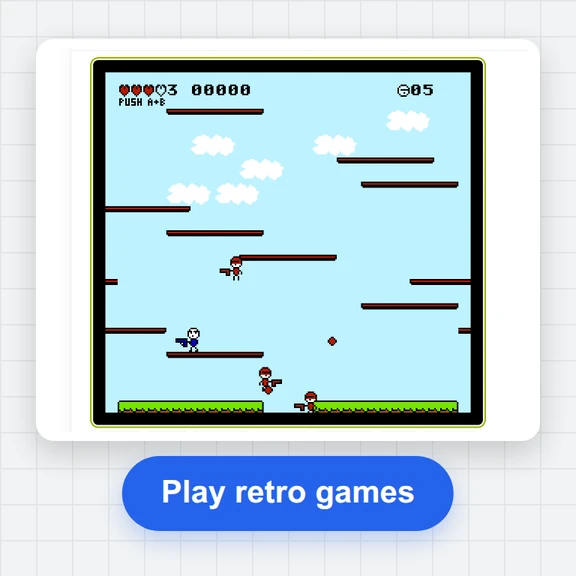 FC / NES Console EmulatorPlay FC/NES (Famicom) games in your browser with local .nes ROM import, keyboard, gamepad and touch controls, save states and fullscreen. Includes 11 freely licensed homebrew games; local files stay on your device.
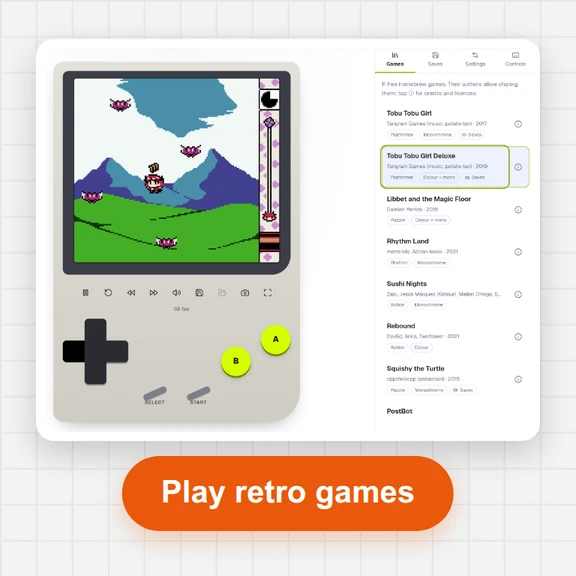 GB / GBC Handheld EmulatorPlay Game Boy (GB) and Game Boy Color (GBC) games in your browser. Import local .gb/.gbc files and use touch, keyboard or gamepad controls, save states, rewind and fullscreen. GBA is not supported.
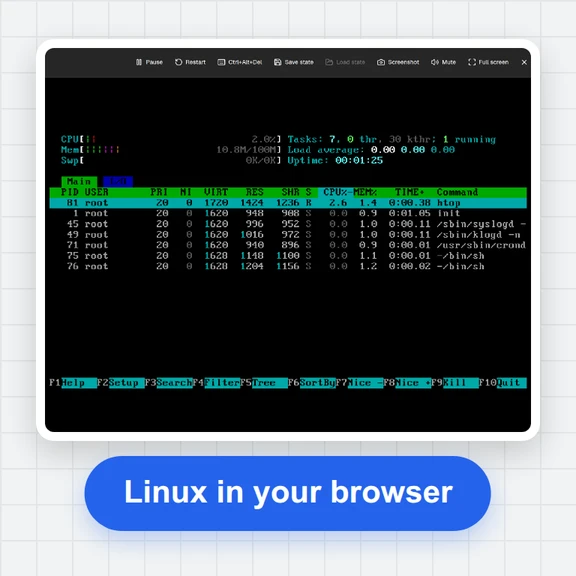 PC EmulatorBoot a real x86 PC in your browser: a Linux shell, FreeDOS with games, or the KolibriOS desktop. Copy files in and out, paste text, save the state. Free, nothing to install.
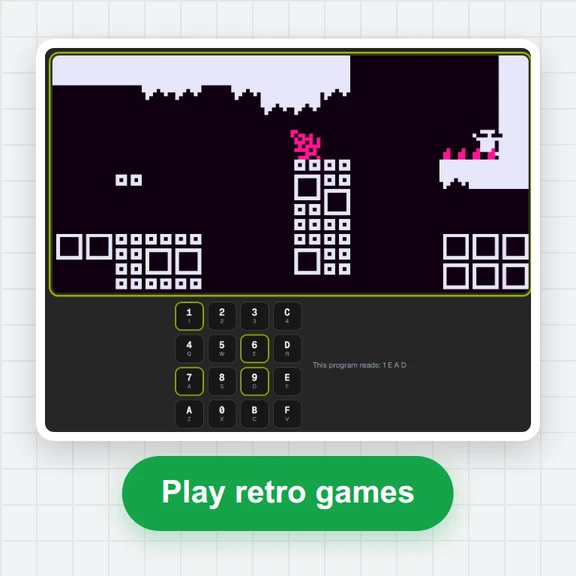 CHIP-8 EmulatorRun CHIP-8, SUPER-CHIP and XO-CHIP programs in your browser: 33 public-domain games, your own .ch8 files, quirk switches, sound, save states and a debugger.
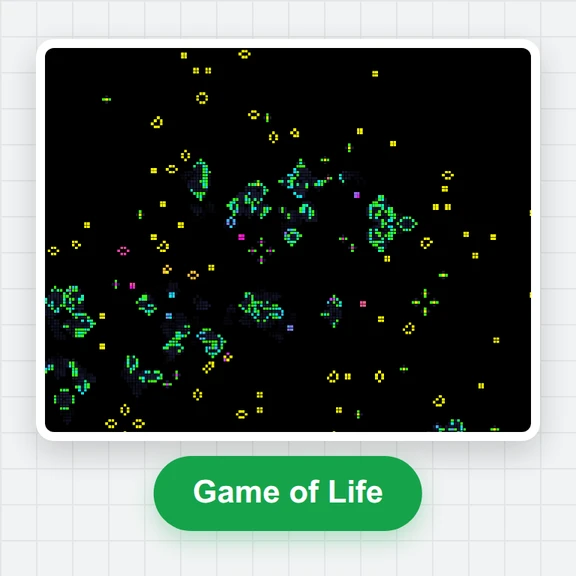 Game of LifePlay the Game of Life free online: draw cells, drop gliders, guns and spaceships, try HighLife and other rules, import RLE patterns and save a video clip.
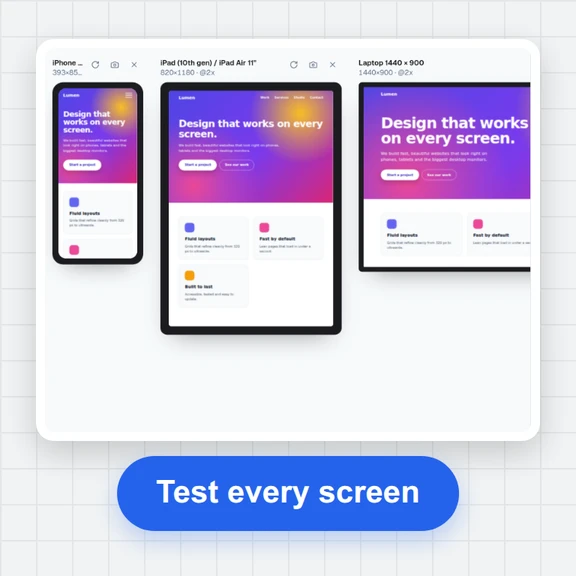 Responsive TesterFree responsive tester: see a website or your HTML at dozens of phone, tablet and laptop screen sizes side by side. Resize, rotate, find overflow, save screenshots.