
Pick a world
Start with scarce food, plenty of food, predators, two islands, a changing climate or a random world from a seed.
This evolution simulator shows natural selection at work: colorful cell-like creatures carry genes for size, speed, vision, metabolism and color, and the traits that help them survive spread through the population. Pick a world, speed it up and follow the graphs. Click any creature to see its genes.
Open Evolution Simulator →Start with scarce food, plenty of food, predators, two islands, a changing climate or a random world from a seed.
Run at 5× or faster and follow the graph: within a minute or two the average traits start to move.
Adjust mutation, food, carrying capacity, predators and cold, click creatures to read their genes, then save the world, a picture or a video.
Run scarce food, note where metabolism ends up, then run plenty of food with the same seed and compare.
Predators spot creatures that stand out from the ground first, so colors close to the ground become common.
With water in the middle the two groups never mix. Each island's color drifts toward its own ground.
Set mutation to 0% and traits stop changing once the variety is used up. Very high mutation blurs the result.
In the changing climate, cold seasons favor bigger bodies and warm seasons smaller ones, so the size graph wobbles.
Save the world as JSON, try a change, and load it again to compare from exactly the same moment.
Use Manlin to reflect, plan and take your next step.

Each creature has five genes: size, speed, vision, metabolism and color. It moves toward food it can see, moves away from predators it can see, burns energy every second, and splits in two when it has stored enough. The copy's genes change a little at random. Creatures die of hunger, old age, crowding or predators. Nothing else is scripted: any change in the average traits comes only from which creatures survive long enough to split.
It is a simplified model for exploring the idea of natural selection: heritable variation plus different survival leads to changing traits. Real organisms have far more genes, sexual reproduction, development and ecology. Treat the results as a demonstration, not a prediction about real species.
Size stores more energy, is harder for predators to catch and loses less heat in the cold, but costs more upkeep. Speed reaches food and escapes sooner but costs energy to move. Vision sees food and predators from further away for a small cost. Metabolism sets the pace of life: faster movement and earlier splitting, but higher energy use and a shorter life. Color does nothing by itself; it only matters when predators are hunting.
At 5× to 10× speed the presets show a clear change within one to two minutes, after a few dozen generations. The graph in the settings panel shows the average and the spread of each trait over time.
Yes. It is free with no sign-up and no watermark, and it runs in your browser. Nothing is uploaded.
Save the world as a JSON file and load it later to continue exactly where you stopped, with every creature and the graphs. A seed number also recreates the same starting world with the same settings.
Yes. Choose 9:16, 1:1 or 16:9, a length and frame rate, and the simulator plays the world forward from the current moment into an MP4 (or WebM).
Yes. The world turns to fill a tall screen, tap a creature to inspect it, and the settings and graphs slide up from the bottom.
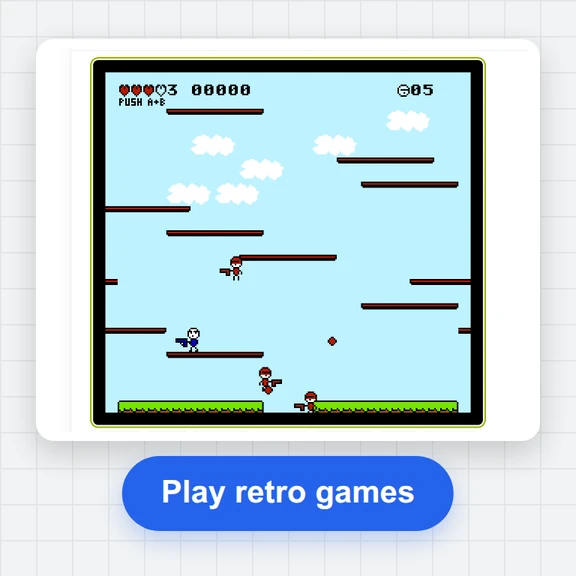 FC / NES Console EmulatorPlay FC/NES (Famicom) games in your browser with local .nes ROM import, keyboard, gamepad and touch controls, save states and fullscreen. Includes 11 freely licensed homebrew games; local files stay on your device.
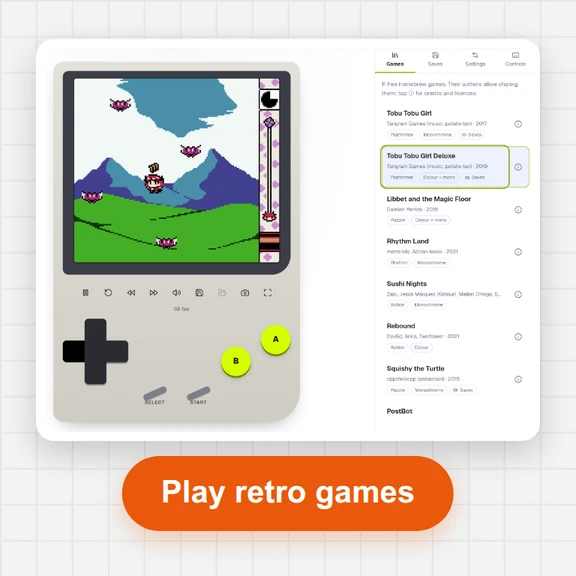 GB / GBC Handheld EmulatorPlay Game Boy (GB) and Game Boy Color (GBC) games in your browser. Import local .gb/.gbc files and use touch, keyboard or gamepad controls, save states, rewind and fullscreen. GBA is not supported.
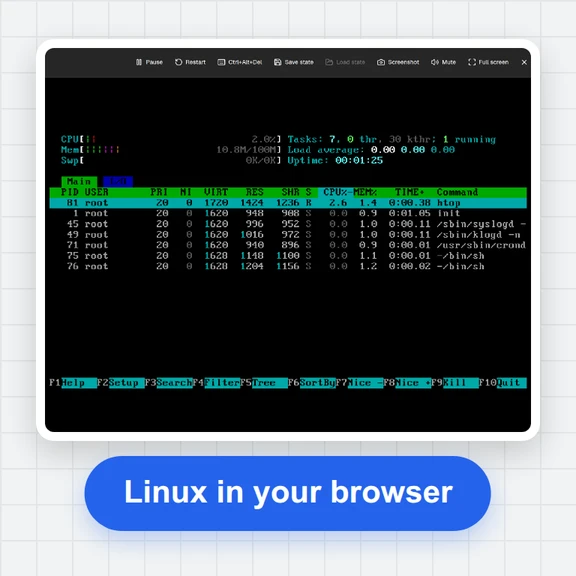 PC EmulatorBoot a real x86 PC in your browser: a Linux shell, FreeDOS with games, or the KolibriOS desktop. Copy files in and out, paste text, save the state. Free, nothing to install.
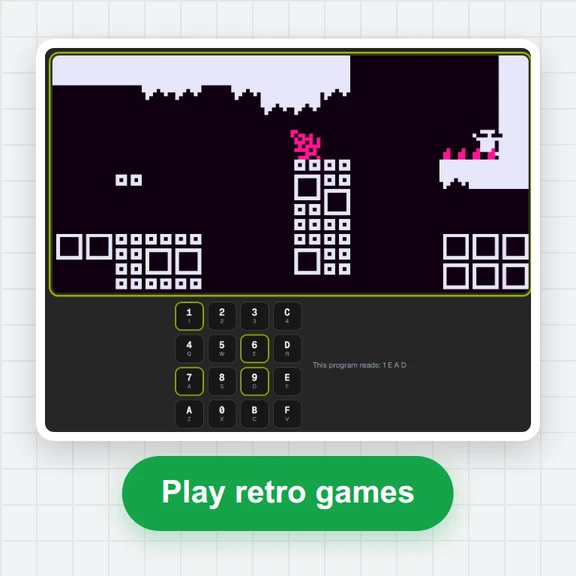 CHIP-8 EmulatorRun CHIP-8, SUPER-CHIP and XO-CHIP programs in your browser: 33 public-domain games, your own .ch8 files, quirk switches, sound, save states and a debugger.
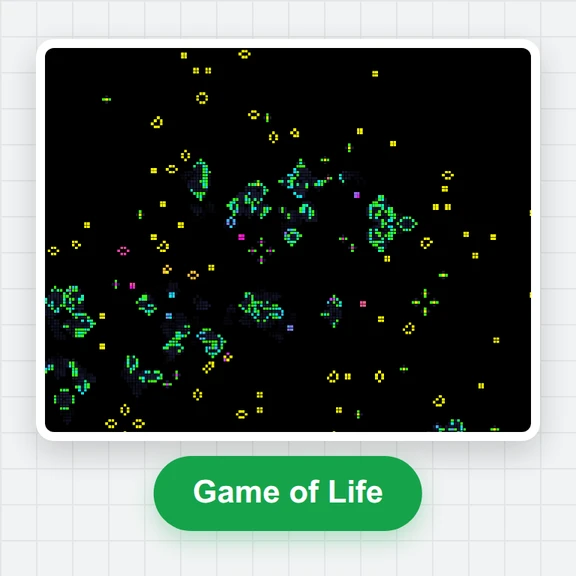 Game of LifePlay the Game of Life free online: draw cells, drop gliders, guns and spaceships, try HighLife and other rules, import RLE patterns and save a video clip.
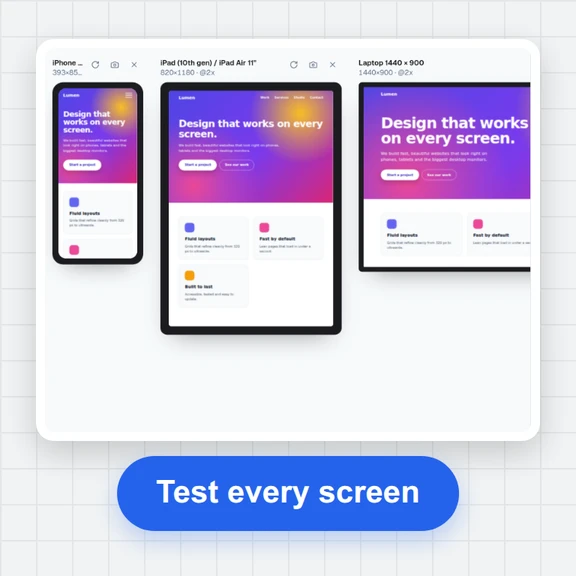 Responsive TesterFree responsive tester: see a website or your HTML at dozens of phone, tablet and laptop screen sizes side by side. Resize, rotate, find overflow, save screenshots.