
Find an element
Search by name, symbol or atomic number, or click a category in the legend. Use the arrow keys to move across the table.
Click any element for its atomic weight, electron configuration, melting and boiling points, isotopes, Bohr model and more. Colour the table by electronegativity, radius or density, slide the temperature to see what melts, and test yourself with a quiz.
Open Periodic Table →Search by name, symbol or atomic number, or click a category in the legend. Use the arrow keys to move across the table.
Click an element to see every property with units, its electron configuration, Bohr model, isotopes and neighbours, and compare it with another element.
Switch to Trends or State to colour the table, take a quiz, or download a PDF poster or the data as CSV.
Use Manlin to reflect, plan and take your next step.

Yes. Every feature, the quiz and the PDF, PNG and CSV downloads are free, with no account and no watermark.
Atomic weights are the IUPAC (CIAAW) 2024 standard atomic weights. Ionization energies and electron configurations come from the NIST Atomic Spectra Database, isotope abundances from NIST, heat capacities from the NIST-JANAF tables, and most other properties from PubChem. Values were cross-checked against other public references.
For some elements, such as hydrogen and carbon, the atomic weight varies with the source of the sample, so IUPAC gives an interval; the table shows a conventional value. Radioactive elements without a standard atomic weight show the mass number of their longest-lived isotope in square brackets.
Slide the temperature from 0 to 6000 K. Each element is shown as solid, liquid or gas by comparing the temperature with its melting and boiling points at normal atmospheric pressure. Helium never freezes at that pressure, and carbon and arsenic turn straight into gas.
Only bromine and mercury are liquid at 25 °C. Gallium and caesium melt just above it, at about 30 °C and 28.5 °C, so they turn liquid on a warm day.
Yes. Use Print for a clean one-page table, or download a high-resolution PDF or PNG poster in A4 or A3. The CSV file has every value for spreadsheets.
Yes. The table scrolls and zooms with two fingers, the List view shows the elements as a sortable table, and the quiz has large buttons.
Superheavy elements exist only a few atoms at a time, so properties such as density or melting point have never been measured. The table marks missing values instead of guessing.
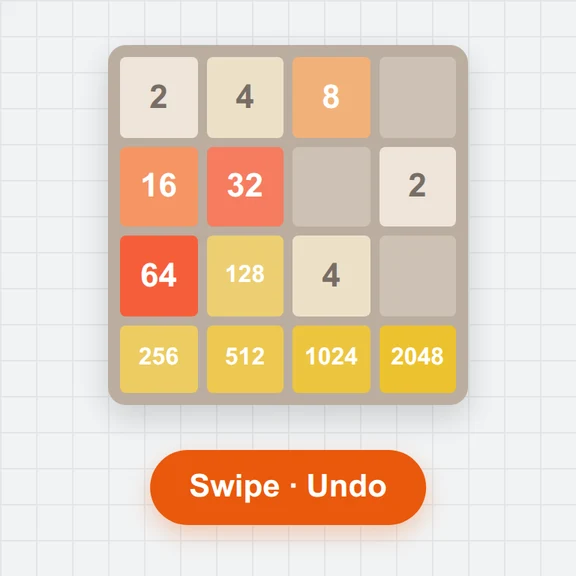 2048Play 2048 free online: swipe or use arrow keys, undo moves, try 3×3 to 6×6 boards, a daily challenge with the same tiles for everyone, stats and colour-blind-safe tiles.
 Mouse Sensitivity ConverterConvert game sensitivity and DPI while keeping the same cm/360°. Free, local, with eDPI and downloadable settings.Aim TrainerPractice clicking, target switching and tracking in your browser. Free 2D aim drills, local history and downloadable scorecards.
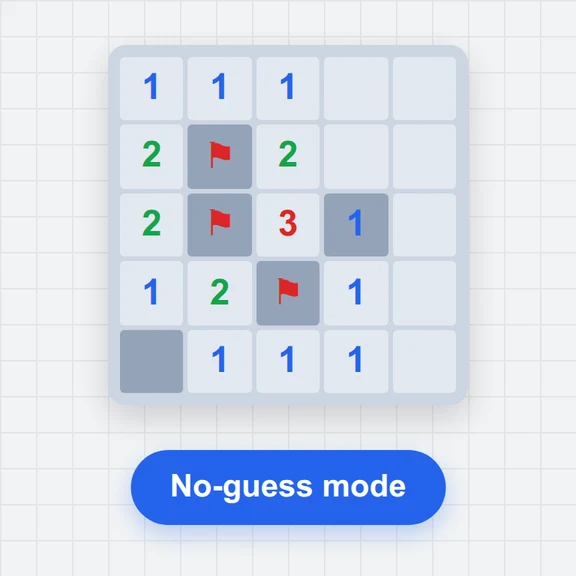 MinesweeperPlay Minesweeper free in your browser: beginner, intermediate, expert or custom boards, no-guess mode, hints that explain the logic, daily board, stats and touch controls.
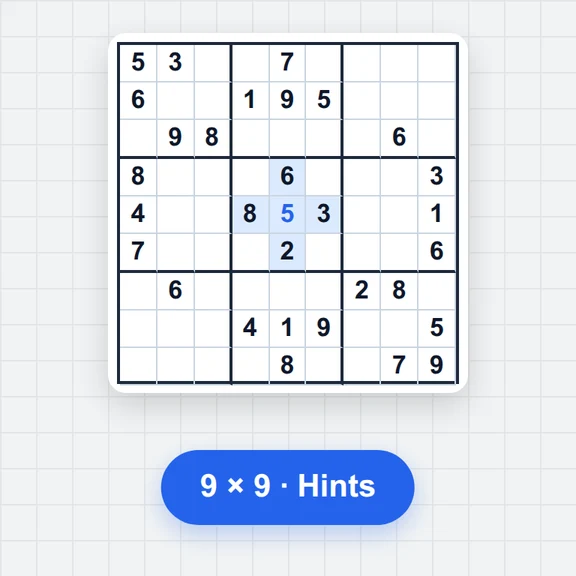 SudokuPlay free Sudoku online: 6 difficulty levels, a daily puzzle, notes, hints that explain each step, a step-by-step solver and printable PDF puzzles. No sign-up.
 ChessPlay chess free in your browser: 8 computer levels from beginner to strong, two players on one device, clocks, hints, undo, move list and PGN/FEN import and export.